
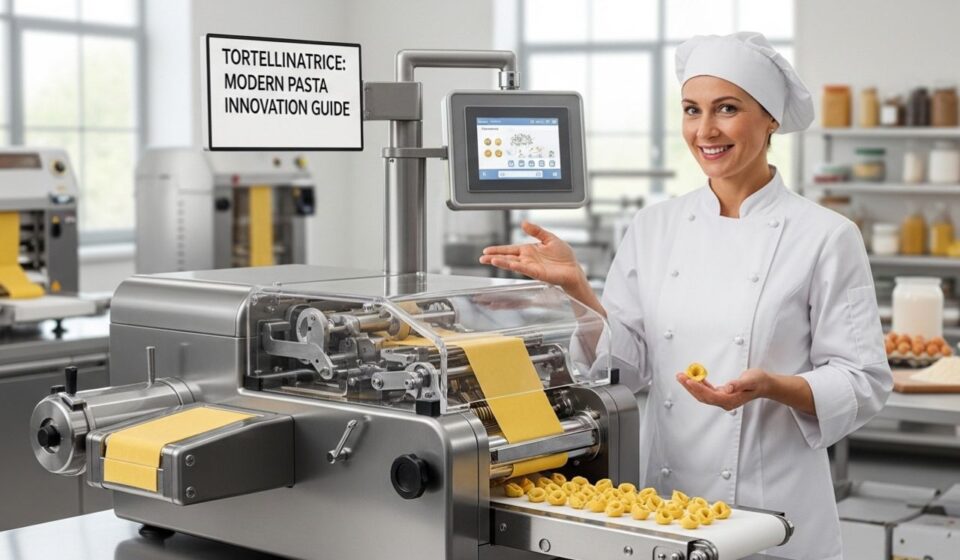

The art of pasta-making has evolved significantly over the years, blending traditional culinary techniques with advanced machinery. One such innovation that stands out in the pasta industry is the Tortellinatrice. Designed specifically to produce tortellini efficiently, this machine has become an essential tool for both small-scale artisans and large food manufacturers.
In this comprehensive guide, we will explore what a Tortellinatrice is, how it works, its benefits, types, and its growing importance in modern food production.
What is a Tortellinatrice?
A Tortellinatrice is a specialized machine used to produce tortellini—small, ring-shaped stuffed pasta traditionally originating from Italy. Unlike manual methods that require skill and time, this machine automates the process, ensuring consistent shape, size, and filling distribution.
Traditionally, tortellini were handcrafted, with each piece carefully folded by skilled hands. However, as demand increased, especially in commercial kitchens and food industries, the need for faster production methods led to the development of the Tortellinatrice.
Tortellinatrice in Traditional vs Modern Pasta Making
In the past, making tortellini was a labor-intensive process involving rolling dough, cutting it into small squares, adding filling, and folding each piece individually. While this method ensured authenticity, it limited production capacity.
On the other hand, a Tortellinatrice bridges the gap between tradition and efficiency. It preserves the classic shape and texture of tortellini while significantly increasing output. As a result, businesses can maintain quality while meeting growing consumer demand.
How a Tortellinatrice Works
A Tortellinatrice operates through a series of coordinated steps that transform raw ingredients into perfectly shaped pasta:
1. Dough Preparation
The dough is prepared separately and fed into the machine. It is rolled into thin sheets to achieve the ideal consistency.
2. Filling Injection
The machine evenly distributes the filling—whether meat, cheese, or vegetables—onto the dough sheet.
3. Cutting and Shaping
The dough is then cut into precise portions and folded into the signature tortellini shape. This step is where the machine demonstrates its precision and efficiency.
4. Final Output
The finished tortellini are collected, ready for cooking, packaging, or further processing.
Because of this streamlined process, a Tortellinatrice can produce hundreds or even thousands of pieces per hour, depending on the model.
Types of Tortellinatrice Machines
There are several types of Tortellinatrice machines available, each designed for specific production needs:
Manual Tortellinatrice
These are semi-automatic machines suitable for small businesses or artisanal kitchens. They require some human involvement but still speed up production compared to traditional methods.
Automatic Tortellinatrice
Fully automated machines are ideal for large-scale production. They handle everything from dough feeding to shaping with minimal human intervention.
Industrial Tortellinatrice
Designed for factories, these machines offer high-speed production, advanced customization, and integration with other food processing systems.
Compact Tortellinatrice
Perfect for restaurants or small food businesses, compact models offer efficiency without taking up much space.
Benefits of Using a Tortellinatrice
The growing popularity of the Tortellinatrice can be attributed to its numerous advantages:
Increased Efficiency
One of the biggest benefits is the ability to produce large quantities of tortellini in a short time. This makes it ideal for businesses looking to scale operations.
Consistent Quality
The machine ensures uniform size and shape, which is difficult to achieve manually. As a result, this consistency enhances product presentation and customer satisfaction.
Cost-Effective Production
Although the initial investment may be high, the long-term savings in labor and time make it a cost-effective solution.
Hygiene and Safety
Modern Tortellinatrice machines are designed with food safety standards in mind, reducing the risk of contamination.
Customization Options
Many machines allow users to adjust size, filling quantity, and dough thickness, offering flexibility in product creation.
Tortellinatrice in the Food Industry
The role of the Tortellinatrice in the food industry is expanding rapidly. In fact, from small Italian restaurants to global food manufacturing companies, this machine is transforming pasta production.
Restaurants and Cafés
Restaurants use compact Tortellinatrice machines to serve freshly made tortellini, enhancing their menu offerings.
Catering Services
Catering businesses benefit from the machine’s ability to produce large quantities quickly, ensuring timely service.
Food Manufacturing Companies
Large-scale producers rely on industrial Tortellinatrice machines to meet high market demand while maintaining consistent quality.
Frozen Food Industry
The frozen food sector uses these machines to produce ready-to-cook tortellini, catering to convenience-driven consumers.
Choosing the Right Tortellinatrice
Selecting the right Tortellinatrice depends on several factors:
Production Capacity
Determine how much tortellini you need to produce daily. This will help you choose between manual, automatic, or industrial models.
Budget
Prices vary widely depending on features and capacity. It is important to balance cost with functionality.
Space Availability
Consider the available space in your kitchen or production facility before purchasing a machine.
Ease of Use
User-friendly machines with simple controls can save time and reduce training requirements.
Maintenance Requirements
Choose a machine that is easy to clean and maintain to ensure long-term efficiency.
Maintenance and Care Tips
To ensure optimal performance, regular maintenance of a Tortellini machine is essential:
- Clean the machine thoroughly after each use
- Inspect components for wear and tear
- Lubricate moving parts as recommended
- Follow the manufacturer’s guidelines for operation
- Schedule periodic professional servicing
Proper care not only extends the machine’s lifespan but also maintains product quality.
Challenges of Using a Tortellinatrice
Despite its many benefits, using a Tortellinatrice comes with some challenges:
Initial Investment
High-quality machines can be expensive, which may be a barrier for small businesses.
Learning Curve
Operators may require training to use the machine effectively.
Maintenance Costs
Regular servicing and replacement of parts can add to operational costs.
Limited Artisanal Touch
While efficient, machine-made tortellini may lack the unique touch of handmade pasta.
Innovations in Tortellinatrice Technology
The Tortellinatrice continues to evolve with technological advancements. Modern machines now feature:
- Digital control panels for precise adjustments
- Automated cleaning systems
- Energy-efficient designs
- Integration with smart production lines
- Advanced filling mechanisms for diverse recipes
These innovations are making the machine more accessible and efficient for a wide range of users.
Tortellinatrice and Sustainability
Sustainability is becoming increasingly important in the food industry, and the Tortellini machine is no exception. Many manufacturers are focusing on eco-friendly designs that reduce energy consumption and waste.
Additionally, the ability to control ingredient usage precisely helps minimize food waste, contributing to more sustainable production practices.
Future of Tortellinatrice
The future of the Tortellinatrice looks promising as demand for convenient and high-quality food products continues to grow. Emerging trends include:
- Increased automation and AI integration
- Customizable production for niche markets
- Expansion into home-use machines
- Enhanced focus on sustainability
- Improved affordability for small businesses
As technology advances, the Tortellinatrice is expected to become even more versatile and efficient.
Conclusion
The Tortellini machine represents a perfect blend of tradition and innovation in the world of pasta-making. By automating the production process, it allows businesses to meet growing demand without compromising on quality.
Whether you are a small restaurant owner or a large-scale manufacturer, investing in a Tortellinatrice can significantly enhance productivity, consistency, and profitability. As the food industry continues to evolve, this machine is set to play an even more important role in shaping the future of pasta production.